Showing posts with label vegan. Show all posts

Thursday, July 1, 2010

Thursday: It's been so long, beans


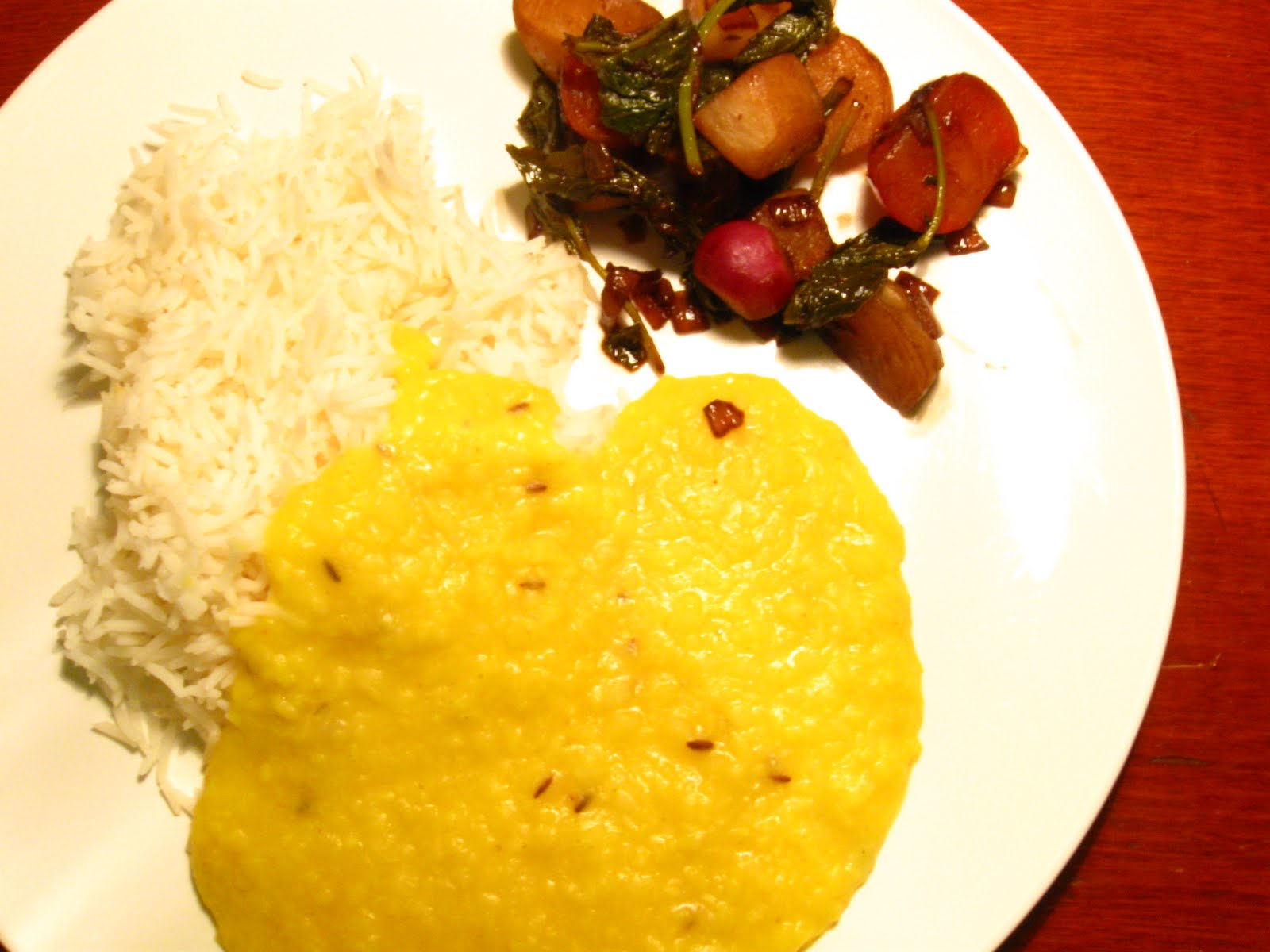
Long beans cooked with mustard seeds and red pepper, served with toor dal and basmati rice.

It's been quite a while since long beans last appeared on the blog - but it'd be more often if we could find them more frequently!  These relatives of black-eyed peas have a deep, delicious flavor with less of the harsh greennness of green string beans, and have an almost dry but chewy texture.  In this recipe from Madhur Jaffrey's World of the East, they were flavored with asafoetida, mustard seeds, cumin, toasted urad dal, dried red chilies and cayenne pepper, and at the end of cooking we added grated coconut.  If you have those ingredients on hand, you could try this preparation with normal green beans too.  We really loved this dish.

Monday, June 28, 2010

Monday: Re-Roti


Warm black-eyed pea and golden chard salad, served with roti.

Elizabeth Schneider's Vegetables: From Amaranth to Zucchini attributes this recipe to Cyprus.  Chard leaves and stems are just simmered briefly and tossed with black-eyed peas, lemon juice, and olive oil.  We were enamored of the roti we made on Friday (why haven't we made it in so long??) so we made another short stack.  Roti is really not that hard:

ROTI

Put 1 cup whole wheat flour into a bowl, and slowly add up to 1/2 cup water, mixing until the dough adheres and you can knead it.  Knead 7-8 minutes.  Then roll into a ball, put it back in the bowl, and cover with a damp cloth.  Leave it there for 1/2 hour to 3 hours.

Put a cast iron skillet on a medium flame to let it heat up.  Meanwhile, knead the dough again and then divide it into eight balls.  Roll each one out on a floured board until it's about five inches in diameter (it should be pretty thin).  Then place each roti directly on the skillet and within about 30 seconds it should start to puff up.  If this doesn't happen, the griddle probably isn't hot enough yet.  Flip the roti and let the other side cook about 30 seconds again.  Remove and gorge.

PS: this recipe, from Madhur Jaffrey's Invitation to Indian Cooking, is technically for "chapati."  But that is apparently the same as roti.

Friday, June 25, 2010

Friday: Caldo Verde


Caldo verde, made with lamb's quarters.

"Caldo verde" is a Goan, Portuguese-influenced dish, which calls for kale along with the potatoes, but here we substituted lamb's quarters instead.  You basically simmer the vegetables together for a long time and then puree - the only seasoning is onion and a huge amount of garlic.  It had a very thick, viscous texture because of the starch of the new potatoes.

We also made fresh roti - an unleavened flat bread, cooked on a cast-iron skillet - as an accompaniment.

Thursday, June 24, 2010

Thursday: Barley salad


Pearl barley salad with summer squash and almonds.

This tasty grain salad actually included two types of summer squash: some left-over Cousas, as well as the shiny green "avocado" squash.  You can see the distinctly yellow flesh of the avocado squash in the picture above.  Up until now, we had really only used barley in soups, but we thought its chewy texture was nice here punctuated by crunchy red onions and toasted almonds.

Tuesday, June 22, 2010

Tuesday: "Snow" peas?? In the middle of June? Take that, Al Gore!


 Stir-fry of purple snow peas, carrots, crimini mushroom and tofu, served over rice.

If you have vegetable odds and ends on hand, a stir fry is usually within reach.  We actually bought these beautiful purple snow peas in contemplation of a stir fry, so we picked up some mushrooms as well.

Saturday, June 19, 2010

Saturday lunch: Saag story

 
Saag and hulled moong dal, served with basmati rice.
We're a little shocked that we haven't made saag for an entire year, since it's a classic and one of our favorite comfort foods.  It can take many forms: made with spinach (as we did here) or some other local greens; pureed or merely cooked down to a soft texture; studded with paneer, meat, or something more unconventional, like tofu.  This spinach had a particularly deep, rich flavor - it seemed to be a different variety than the usual one you find in salad mixes, as it had slightly lance-shaped, angular leaves.
Dessert was this beautiful bowl of black raspberries (not the same as blackberries), which are so soft and easily ruined in transit that they are hard to find in grocery stores, but are widely available at the farmer's market during this season:

Friday, June 4, 2010

Friday: An oldie but a goodie

 
Cucumber-purslane salad with chickpeas and pink radish. 
This is our first purslane of the season - we like to make this cool salad with it, dressed in some lemon juice and olive oil.

Monday, May 31, 2010

Monday: Springtime standard

 
Roasted asparagus with a white bean salad with almond, scallions and dill.

Wednesday, May 19, 2010

Wednesday: Yet another vegetable that can be purple, continued


Stir-fry of purple bok choy, tofu, and roasted cashews.

Bok choy (which you may also encounter as "pak choi" or other variations thereof) is yet another member of the illustrious brassica dynasty.  We think all the brassica go well with cashews, so we roasted a few and threw them in to this improvised stir-fry, which was also flavored with garlic, ginger, and soy sauce. 

We couldn't let these particular bok choy go because they were purple:


We had never encountered this color before.  Like many purple veggies, these leaves shed their color into the dish during cooking.  As you can see up top, the tofu ended up a little worse (or maybe just weirder) for the wear. 

Sunday, May 16, 2010

Sunday: Radical radishes


Braised heirloom radishes with moong dal on basmati rice.

These mixed heirloom radishes were too pretty not to buy: the bunch contained red, purple, pink and white small radishes, plus a few that were light brown and had a rough texture, like a "golden russet" apple.  We didn't realize until now that radishes are actually a spring vegetable.  To tone down their spiciness, we braised the radishes along with their tops, which were in good shape.  Balsamic vinegar is not a traditional Indian ingredient but this still worked well as a vegetable dish to pair with moong dal.

Tuesday, May 11, 2010

Tuesday: Re-pesto


Sorrel-garlic chive pesto.

We've been making a lot of pestos, including one with sorrel, but this was another nice variation: we threw in garlic chives, instead of garlic or ramps.  As part of our pesto experimentation, we've just been substituting whatever allium we happened to have around the house for the standard garlic cloves.  So far they've all passed muster.

Monday, May 10, 2010

Monday: Emptying the winter larders


Braised celery root with chickpeas, almonds and saffron, served on basmati rice.

We supplemented this recipe with almonds, which we thought would pair well with the somewhat Mediterranean flavors of chickpea and saffron.  The saffron dyed everything a warm yellow.  These knobs of celeriac were some of our last overwintered vegetables.

Tuesday, May 4, 2010

Tuesday: Kinpira redux


Carrot-burdock kinpira with pan-fried tofu and rice.

Kinpira has already appeared on the blog: we're officially on the market for another burdock recipe, though this one is pretty great. 

In other burdock-related news, we were walking through the park the other day and realized that a few plants looked strangely familiar.  In fact, they looked just like the burdock tops we cooked recently.  As it turns out, burdock is growing all over the park!  We found several first-year plants, with their smaller, edible leaves, as well as a few second-year plants, which send up a huge stem and grow flowers and burrs.  One of them is about our height. 

Wednesday, April 21, 2010

Wednesday: D4SA fusion night


Idli with stir-fried pea shoots in garlic-black bean sauce.

Idlies are small, steamed South Indian cakes made from a fermented rice and lentil (urad) batter. As you can see from the picture, they have a spongy texture which is perfect for sopping up sauces and chutneys. They also have a pleasant, slightly sour taste. In some parts of India they might serve as a breakfast food.

We had been hoarding some idli batter ever since our recent trip to Jackson Heights, but hadn't decided what to pair it with. We finally settled on this odd combination - the pea shoot recipe is actually Vietnamese. It was a great excuse to use the black bean sauce that Lizz impulse-purchased not too long ago at M2M. We don't know the current status of diplomatic relations between India and Vietnam, but these two dishes got along quite well!

Tuesday, April 20, 2010

Tuesday: Another new veggie


Japanese-influenced soup of burdock greens, barley and mushroom.

We improvised this soup as a vehicle for another veggie that is new to us - burdock greens. Burdock root (Japanese "gobo") is a long, brown taproot with an earthy flavor. This is the first time we had seen the greens for sale. Apparently, during the plant's first year of its two-year life cycle, the young greens and stems are soft enough to be edible. The stems just need a little peeling to remove any fibrous skin. We paired the greens with two common Japanese ingredients - barley and mushroom - and flavored the soup with garlic and soy sauce.

Saturday, April 17, 2010

Saturday lunch: Grasping the nettle


Stir-fry of stinging nettles, ramps, carrots and chickpeas, served over basmati rice.

We've seen nettles at the market over the last year or two, but we've been too intimidated to try them out - until now. Yes, they really are "stinging" nettles - if you brush against the leaves, you will get a painful sting which can linger from hours to days. According to Wikipedia, these little leafies have micro-needles which inject you with formic acid, serotonin, histamine, and a couple other nasty chemicals. Luckily, mincing (VERY fine), sauteeing, soaking or boiling the leaves destroys the chemicals that cause the sting. Humans must have figured that out pretty early on, because nettles are a rather ancient food: they are useful as yet another veggie that appears early in the season when few other things are ready for harvest.

We swiped this recipe idea from the excellent food politics blog La Vida Locavore. It's simple - which is what we wanted for our first nettle experience. You may be wondering how one prepares nettles, given that you can't touch them without being stung. The answer: latex gloves. No, seriously.


Nettle leaves separated from inedible stems

It sounds like a lot of trouble to wear gloves just to prep some greens, but these guys were really worth the fuss. They have a deep, interesting flavor once cooked (when raw they smell haylike), and they retain a pleasantly chewy texture even after sauteeing.

Monday, April 12, 2010

Monday:


Potatoes with whole spices and sesame seeds and mung dal.

You might be saying, "But, faithful bloggers! Doesn't mung dal look more like this?" Well, on our recent Jackson Heights shopping spree we picked up this pack of mung dal, which was missing its green hulls and which had a brighter yellow color overall. To be honest we have not been able to sort out what's going on there, but they are definitely skinless, and maybe something has been done to change the color (like a light roasting). Regardless, they have a slightly less distinctive but definitely still tasty flavor, they're a bit quicker-cooking, and they have a creamy texture since they're lacking their skins.

Tuesday, April 6, 2010

Tuesday: These are a few of our favorite things


Karela pulao (bitter gourd and cashew curry).

Three amazing new entrants to the D4SA universe are featured in this meal: bitter melon, curry leaves, and jaggery.  We've used these ingredients many times, but for some reason they haven't made it onto the blog until today.  (Apparently we haven't been shopping in Jackson Heights frequently enough in the past year...)

Bitter melon (also called bitter gourd or karela) is one of the weirder vegetables you may ever encounter.  In this country, it comes in two common varieties: the Indian, smaller and bumpy version, which is dark green and might remind you of a crocodile, and the Chinese, larger and smooth type, which is a lighter green and looks something like a puckered cucumber.  Its most important characteristic is its flavor: a shocking, strong and fascinating bitterness which is utterly unlike the flavor of any other food.  (The closest analog might be the taste of quinine in tonic water, but even that is a pretty impoverished comparison.)  In both of our experience, the first time you try a taste of bitter melon, the flavor spreads through the mouth and seems totally overpowering.  That first bite must trigger some kind of reaction in the brain that renders subsequent encounters permanently less intense.  The next few times we cooked bitter melon after that fateful first taste, we still had to select recipes that include methods of dulling its flavor, such as draining it using salt and turmeric.  But these days we could eat plain sauteed bitter melon and not find it overly strong.  We're not really sure why the human brain would experience bitter melon this way, but we promise you have to try it to believe it.

Curry leaves are less dramatic, but they are one of our favorite food flavorings.  We don't have them as often as we'd like, so we pick them up every time we see them.  Apparently they're a Mediterranean member of the lettuce family, but they have a potent, spicy and complex flavor that plays a role more like bay leaf when added to a dish.  (Note: don't confuse curry leaves with curry powder, which doesn't contain any of this leaf, and is instead a widely varying mix of ground spices.) This is the characteric flavor of many South Indian dishes, which can't really be replicated with any substitution.

Finally, jaggery is just palm sugar.  It's sold in a large brown block, and pieces can be broken or grated off for use.  Like molasses, it has its own totally distinctive aroma in addition to being a sweetener.  We ran out of jaggery quite a while ago and had been using brown sugar as a substitute, which is acceptable, but this recipe made us remember how much flavor we had been missing by doing so.

That was all quite a mouthful for describing a simple pilaf (regionally known as pulao, pillau, paella, etc).  This Mahanandi recipe may be pretty easy to put together, but your three new BFFs above are more than enough to make it totally distinctive.

Monday, April 5, 2010

Monday: Pale Green Things


Methi chole (fenugreek and green chickpea curry).

Lizz's parents visited us in New York this past weekend, and since they had a car, we took advantage of the opportunity to stock up on Indian groceries in Jackson Heights.  In addition to two gigantic ten-pound bags of Lal Qilla brand deradunhi basmati rice, tons of dal, and a block of jaggery (more on that later), we brought home a lovely harbinger of spring: fresh green chana in their shells! 

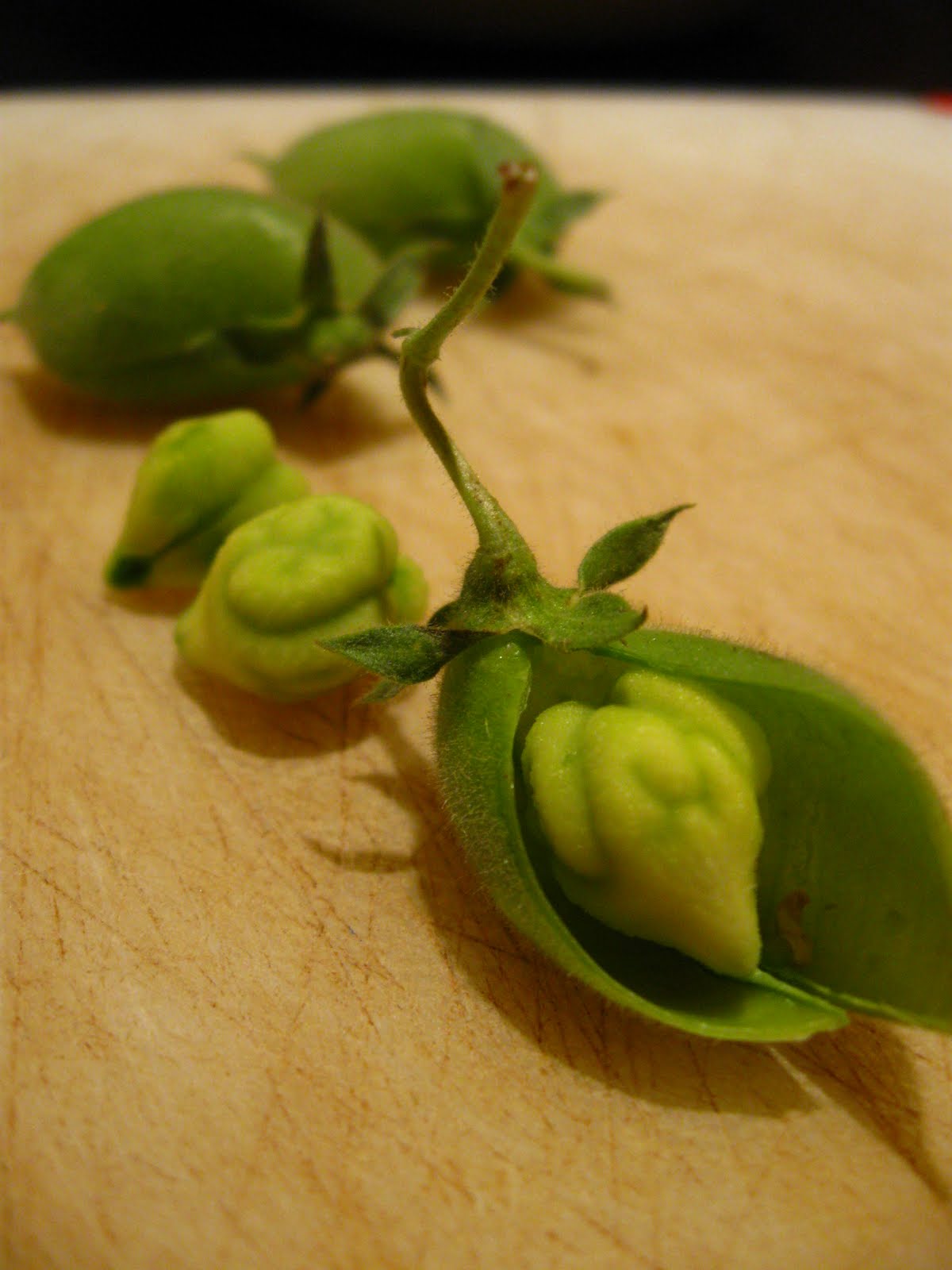
These little guys are only available in the springtime at Indian grocery stores, though the frozen and shelled version is widely available.  They are fresh, only partially mature chickpeas, and they grow in cute little pods that look like green peas:


Also like peas, they have a "green" note and a slightly sweet flavor, and cook very quickly - more like a fresh vegetable than like a dried legume. 

This recipe pairs the chana with fresh methi - fenugreek greens.  These are the greens of the same plant that gives us fenugreek seeds (the source of fake maple sugar flavor, and a frequent component in curry powders).  The flavor of methi is hard to describe, but the greens are noticeably fragrant and herbal - in fact, the dried version is used as a flavoring in some other Indian dishes.  We highly recommend trying them out if you've never had them: they're easy to wilt into vegetable or legume dishes of many kinds.

Monday, March 29, 2010

Monday: Brief concession to the agroindustrial complex


Chana dal with cucumbers.

Yes, you've seen this before - but it's a meal that still tastes good even if you have to use shink-wrapped, industrial cucumbers.